
The Unprecedented Strike That Shook Latin America
In the early morning hours of January 3, 2026, the United States launched what it called “Operation Absolute Resolve” a large-scale military strike on Venezuela that resulted in the capture of President Nicolás Maduro and his wife, Cilia Flores. The operation, which President Donald Trump announced via social media, represents the most significant U.S. military intervention in Latin America since the 1989 invasion of Panama. Maduro was transported to New York to face narco-terrorism charges filed during Trump’s first administration in 2020.
The strikes targeted multiple locations across northern Venezuela, including the capital Caracas and the states of Miranda, Aragua, and La Guaira. According to military sources, the operation involved more than 150 jets taking off from 20 airbases, Delta Force special operations troops, and CIA intelligence support. Trump posted a photograph of a blindfolded Maduro aboard the USS Iwo Jima, announcing that the U.S. would “run the country” until a transition of power could occur.
The Stolen Election That Sparked a Reckoning
To understand the current crisis, one must look back to July 28, 2024, when Venezuela held presidential elections that international monitors deemed neither free nor fair. The National Electoral Council, controlled by government loyalists, declared Maduro the winner with approximately 52 percent of the vote against opposition candidate Edmundo González Urrutia. However, the council never released the detailed precinct-level tally sheets required by law, raising immediate suspicions of electoral fraud.
The opposition published tally sheets from 85 percent of electronic voting machines, which showed González winning by more than a two-to-one margin. Both the United Nations Panel of Electoral Experts and the U.S.-based Carter Center invited by Maduro’s own government to observe the election granted credibility to the opposition’s evidence and questioned the official results. Opposition leader María Corina Machado, who had been barred from running despite winning primary elections, called the situation an “electoral fraudster as president.”
The disputed election was merely the latest chapter in Venezuela’s long decline under Maduro, who assumed power in 2013 after the death of Hugo Chávez. Once one of Latin America’s wealthiest nations thanks to vast oil reserves, Venezuela has been devastated by economic mismanagement, hyperinflation, and corruption. More than eight million Venezuelans have fled the country since 2014, and over 20 million live in multidimensional poverty. The humanitarian crisis includes widespread hunger affecting 5.1 million people, forcing many to adopt extreme survival strategies.
The Trump administration’s justification for military action rested on allegations that Maduro presided over a “narco-state.” In March 2020, the U.S. Justice Department indicted Maduro on cocaine-trafficking conspiracy charges, accusing him of partnering with Colombian rebel groups to flood American streets with drugs. Trump designated two Venezuelan criminal organizations Tren de Aragua and Cartel of the Suns as Foreign Terrorist Organizations, alleging that Maduro led the latter. The U.S. had placed a $50 million bounty on Maduro’s head before the operation.
A Strike That Reverberated Across the Hemisphere
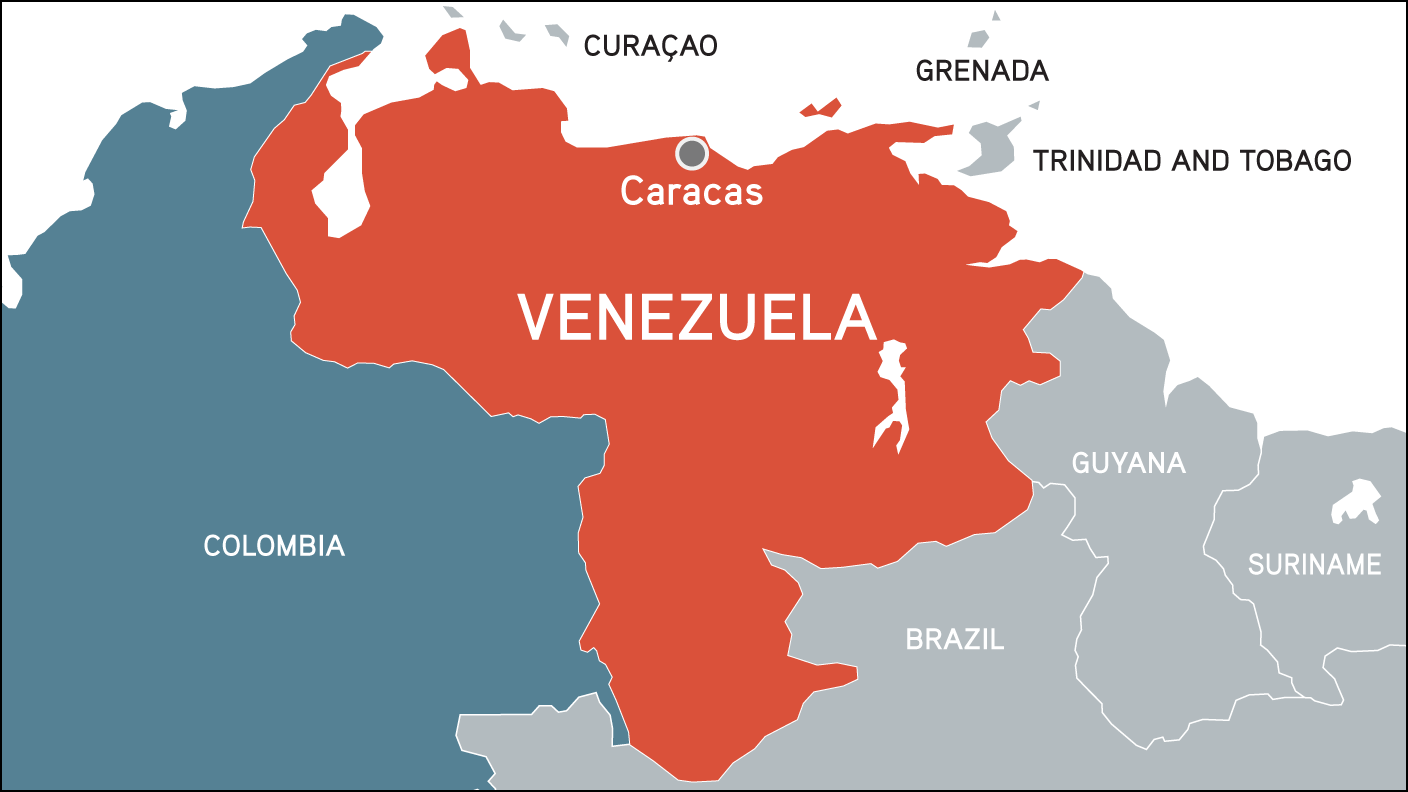
The military strikes concentrated on Venezuela’s most densely populated northern region. The capital city of Caracas bore the brunt of the assault, with explosions reported at Fuerte Tiuna, the country’s largest military complex, and the legislative building. The operation also struck targets in the coastal states where much of Venezuela’s oil infrastructure and political power resides.
The regional implications extend far beyond Venezuela’s borders. Neighboring Colombia, which hosts the largest Venezuelan diaspora, immediately deployed security forces along the border to prepare for a potential refugee influx. Colombian President Gustavo Petro condemned the attack and called for an emergency meeting of the United Nations Security Council. Trinidad and Tobago, which had hosted U.S. military personnel during the Caribbean buildup, quickly clarified it played no role in the operation. Guyana, engaged in its own border dispute with Venezuela, mobilized security forces while cautiously supporting Maduro’s removal.
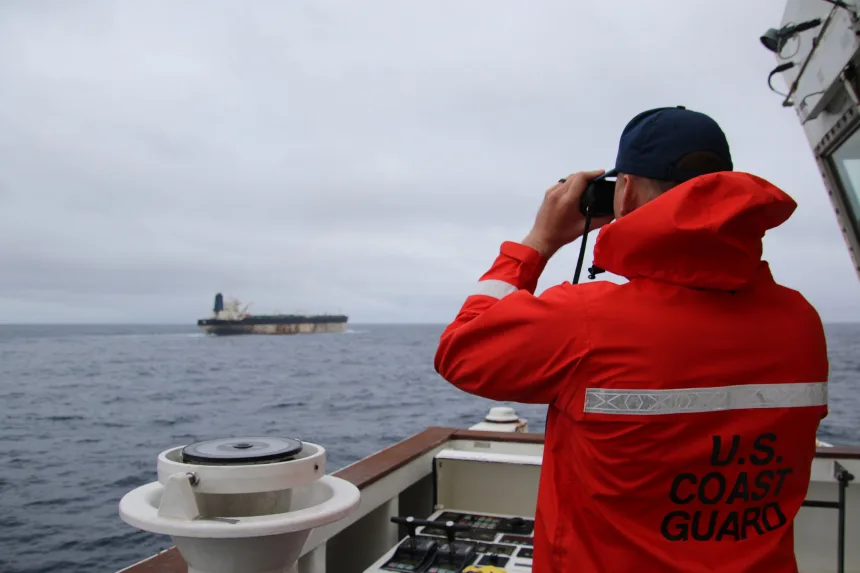
The strikes occurred after months of escalating U.S. military presence in the Caribbean. By early January, some 15,000 U.S. military personnel were deployed in the region, including the USS Gerald Ford aircraft carrier. The Trump administration had conducted previous strikes on alleged drug-trafficking boats and seized tankers carrying Venezuelan oil as part of what it called an expanded counternarcotics campaign.
From Disputed Ballots to Military Jets: A Year of Escalation
The path to military intervention was neither sudden nor inevitable, but rather the culmination of mounting tensions throughout 2025.
The disputed July 2024 election created an immediate legitimacy crisis. By September, a Venezuelan judge issued an arrest warrant for González on charges including “usurpation of functions” and “conspiracy.” González fled to Spain where he received political asylum. Machado went into hiding within Venezuela, moving between unknown locations to avoid arrest, while continuing to organize opposition resistance.
Maduro was sworn in for his third term on January 10, 2025, despite international outcry. The United States, European Union, and several Latin American countries refused to recognize his presidency. Argentina, Uruguay, Costa Rica, Ecuador, Peru, and Panama recognized González as the legitimate president-elect.
Throughout 2025, the Trump administration intensified pressure through both diplomatic and military channels. In August, the U.S. doubled the bounty on Maduro to $50 million. By November, the administration had formally designated Maduro as the head of a foreign terrorist organization. In December, Trump signed a secret directive authorizing the Pentagon to use military force against select Latin American drug cartels.
The operation itself unfolded between 2:00 and 5:00 AM Venezuelan time on January 3, 2026. Within hours, Trump announced Maduro’s capture, and by Saturday evening, the Venezuelan president had arrived in New York to face federal charges in a Manhattan court, where he and his wife pleaded not guilty on January 5.
Narcotics, Resources, or Power? Decoding the Real Motives
The Trump administration has offered multiple rationales for the operation, centering primarily on counternarcotics efforts. Secretary of State Marco Rubio and other officials argued that Maduro’s government had become a criminal enterprise that threatened U.S. security by facilitating drug trafficking. They pointed to the 2020 indictment and alleged ties between Venezuelan government officials and transnational criminal organizations.
Trump himself framed the intervention as both a law enforcement action with military support and an effort to liberate the Venezuelan people from authoritarian rule. He claimed “inherent constitutional authority” to undertake such operations and stated that accessing Venezuela’s oil reserves, gold deposits, and rare earth minerals was among the operation’s goals a frank admission that suggested economic interests alongside stated security concerns.
Critics, however, see different motivations at play. International law experts and numerous world leaders characterized the operation as a violation of Venezuelan sovereignty and the UN Charter’s prohibition on the use of force against the territorial integrity of any state. UN Secretary General António Guterres expressed alarm that “the rules of international law have not been respected,” warning that the operation “constitutes a dangerous precedent.”
Many observers noted the operation’s timing occurring just weeks after Trump’s return to office and amid his “maximum pressure” foreign policy approach. Some experts suggested the strikes represented a return to “resource imperialism,” noting that the Maduro government had previously attempted to offer the U.S. access to Venezuela’s minerals in a failed effort to prevent military action.
The operation also served domestic political purposes for Trump, allowing him to project strength on immigration and drug trafficking issues central to his political base. However, several Democratic lawmakers condemned the action as an “unjustified war” and an illegal exercise of presidential power without congressional authorization.
The Day After: Venezuela’s Future Hangs in the Balance
The immediate aftermath of the operation has created profound uncertainty about Venezuela’s political future and raised serious questions about international order.
Venezuela’s government remains in place, with Vice President Delcy Rodríguez sworn in as acting president on January 5, 2026. Initially demanding “proof of life” for Maduro and Flores after their disappearance, Rodríguez has since offered to collaborate with U.S. officials “within the framework of international law.” According to reports, Rodríguez’s brother Jorge had held talks with the U.S. government in 2025 about her potentially leading a post-Maduro transitional government, though those discussions had envisioned Maduro going into exile rather than being forcibly captured.
Trump has made contradictory statements about Venezuela’s future governance. While initially claiming the U.S. would “run the country,” Secretary of State Rubio walked back these assertions, and Trump later expressed skepticism about opposition leader Machado taking power, saying she doesn’t have sufficient support or respect within Venezuela. The opposition itself remains divided on the path forward, with Machado supporting González as the rightful president-elect while operating from hiding within Venezuela.
The international response has been sharply divided along both ideological and geopolitical lines. Most of Latin America strongly condemned the operation. Brazil’s President Luiz Inácio Lula da Silva called it “a grave affront to Venezuela’s sovereignty and yet another extremely dangerous precedent.” Mexico, Colombia, Chile, Spain, and Uruguay issued a joint statement rejecting the “unilateral” military action. Russia, China, Iran, and Cuba denounced what they characterized as “armed aggression” and “state terrorism.”
European reactions proved more cautious and nuanced. While France and Germany emphasized that international law must be respected, they stopped short of explicitly condemning the strikes. UK Prime Minister Keir Starmer said Britain “sheds no tears” for Maduro’s regime while reiterating support for international law. EU leaders generally called for peaceful, democratic transitions while avoiding direct criticism of U.S. actions.
In contrast, several right-wing Latin American leaders celebrated Maduro’s removal. Argentina’s President Javier Milei, El Salvador’s Nayib Bukele, and Ecuador’s Daniel Noboa expressed support for the operation, framing it as striking a blow against the region’s “narco-Chavista” networks.
The UN Security Council convened on January 5 at the request of Colombia, Venezuela, Russia, and China. The session highlighted deep divisions within the international community, with no consensus emerging on how to respond to what many characterized as a violation of the UN Charter. UN human rights officials warned that accountability for Venezuela’s well-documented human rights abuses must not be forgotten amid the crisis, while also emphasizing that such violations do not justify military intervention that breaches international law.
For the Venezuelan people, the immediate outlook remains precarious. The humanitarian crisis that has driven millions into exile continues unabated. The UN Humanitarian Response Plan remains severely underfunded at less than 28 percent of its target. With political instability deepening and the economy in shambles, many Venezuelans face an agonizing choice between staying in an increasingly chaotic homeland or joining the eight million who have already fled.
The operation’s broader implications extend well beyond Venezuela. The precedent of a major power conducting regime change through military force even against a government credibly accused of electoral fraud and human rights abuses raises fundamental questions about international order. If the principle of sovereignty can be set aside when a government is deemed sufficiently authoritarian or criminal, who decides when that threshold is crossed? And what prevents other powerful states from invoking similar justifications for their own interventions?
The coming weeks will likely determine whether Venezuela slides into deeper chaos or finds a path toward political stability. Much depends on whether the Venezuelan military and security forces maintain unity behind Rodríguez’s transitional government, whether the opposition can present a coherent alternative, and whether external powers particularly the United States continue to assert control over Venezuelan affairs or permit Venezuelans to determine their own future.
What seems certain is that January 3, 2026, will be remembered as a watershed moment not only for Venezuela, but for the international legal order that has governed relations between states since the end of World War II. Whether it marks the beginning of a freer Venezuela or the dangerous erosion of international law remains an open question that will shape the politics and security of the Western Hemisphere for years to come.
The situation in Venezuela continues to evolve rapidly. This editorial represents analysis based on information available as of January 6, 2026.