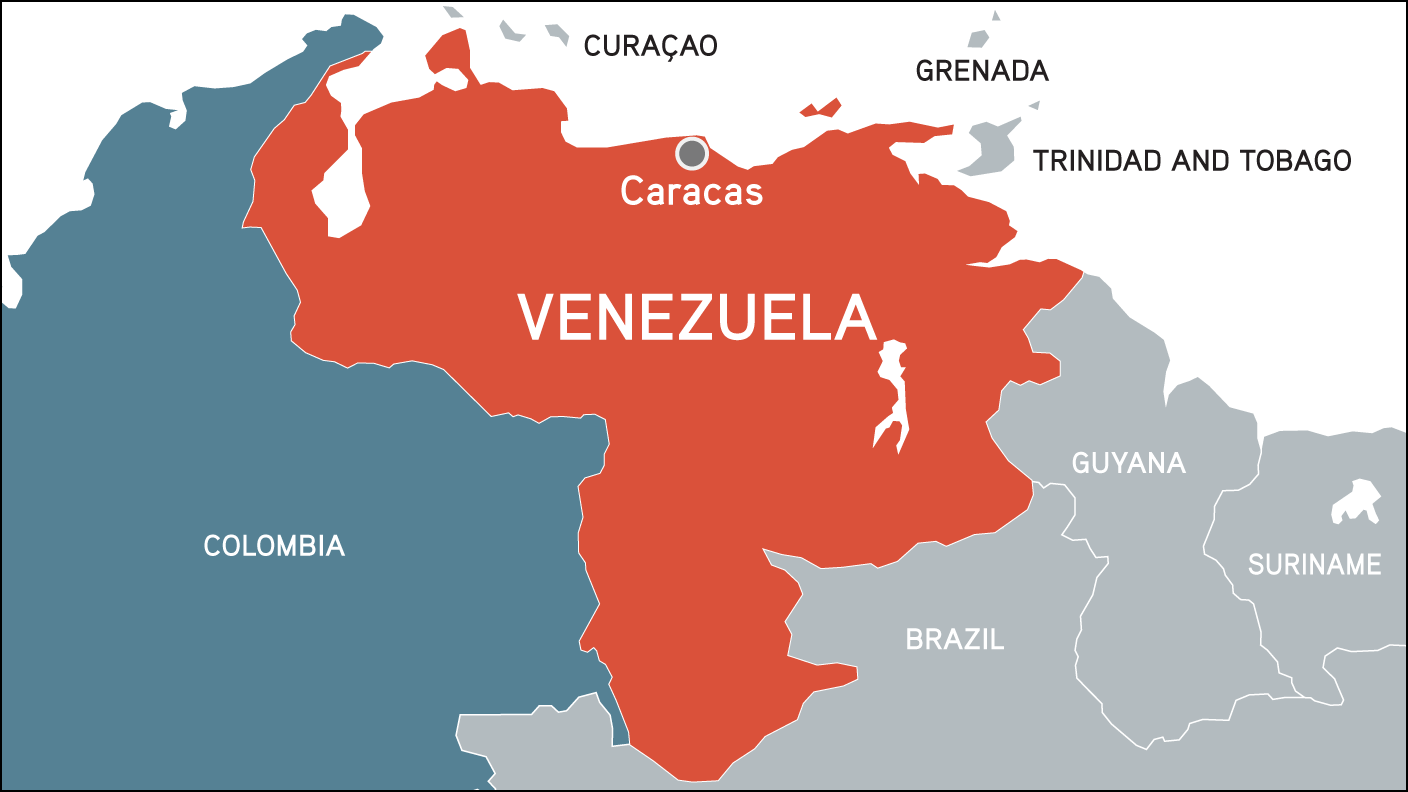

The United States military operation in Venezuela, which culminated in the capture of Nicolás Maduro, has sent shockwaves through the international community. Yet perhaps nowhere has the reverb eration been felt more acutely than in Copenhagen and Nuuk, the capitals of Denmark and Greenland. President Donald Trump’s escalating rhetoric about acquiring Greenland, now paired with the White House’s acknowledgment that military force remains “always an option,” represents more than geopolitical bluster. It marks a potential inflection point for the post-World War II international order and the principle of self-determination.
This is not the first time an American president has expressed interest in Greenland. In 1946, President Harry Truman offered Denmark $100 million for the island. A century earlier, the United States purchased Alaska from Russia and the Danish West Indies, which became the U.S. Virgin Islands. But what made sense in an era of colonial transactions cannot be reconciled with the legal and moral architecture that governs our current international system.
The Strategic Calculus
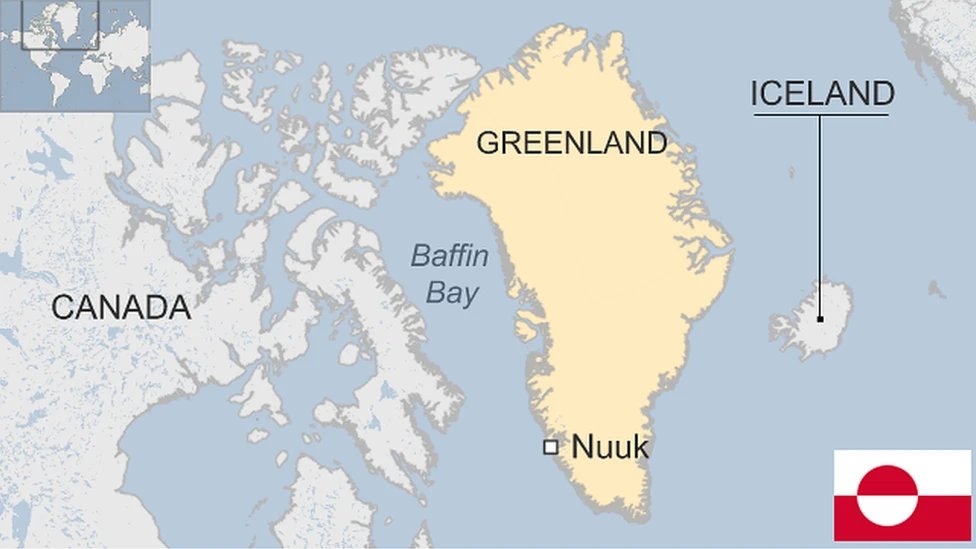
Trump’s interest in Greenland is grounded in legitimate strategic concerns. The island occupies a commanding position in the Arctic, guards critical sea lanes, and hosts the Pituffik Space Base, which provides early warning capabilities for North America. Climate change has rendered Arctic shipping routes increasingly viable, and competition for access to these waterways among the United States, Russia, and China is intensifying.
Beneath Greenland’s ice sheet lie substantial deposits of rare earth elements, including neodymium, dysprosium, and terbium. These minerals are essential for manufacturing electric vehicles, wind turbines, advanced weaponry, and virtually every piece of modern electronics. Currently, China controls approximately 90 percent of global rare earth processing, creating supply chain vulnerabilities that Western nations are scrambling to address. The Kvanefjeld deposit in southern Greenland, one of the world’s largest known reserves of rare earth elements, could theoretically reduce this dependency.
These are serious considerations. No responsible strategist would dismiss the importance of Arctic security or the need to diversify critical mineral supply chains. The question is not whether these concerns merit attention, but whether they justify the methods being contemplated.
The Legal and Moral Framework
Under international law, the matter is settled. Greenland is an autonomous territory within the Kingdom of Denmark, but since 2009, legislation has recognized Greenlanders’ inherent right to self-determination and independence. This right is not a courtesy extended by Copenhagen or Washington. It is fundamental, enshrined in the UN Charter and affirmed repeatedly by the International Court of Justice.
Professor Matthias Goldmann, an international law expert, has stated unequivocally that any attempt to acquire Greenland without the consent of its people would violate their right to self-determination. The notion that territory can be bought and sold between states, irrespective of the wishes of its inhabitants, belongs to an earlier age. The 20th century saw the development of self-determination as a cornerstone of international law, providing the legal foundation for decolonization. To disregard this principle now would not merely be anachronistic; it would constitute a direct assault on the norms that have prevented territorial conquest from becoming routine in the modern era.
Greenland’s Prime Minister Jens-Frederik Nielsen has been emphatic: “No more pressure. No more hints. No more fantasies about annexation.” These are not the words of a colonial administrator awaiting instructions from a metropole. They are the assertion of a people claiming their right to determine their own future. Denmark’s Prime Minister Mette Frederiksen has warned that any U.S. military action against Greenland would effectively end NATO, severing the security architecture that has underpinned transatlantic stability for more than seven decades.
The Paradox of Power
What makes this situation particularly troubling is the disconnect between ends and means. The United States already enjoys extensive access to Greenland. Under the 1951 Greenland Defense Agreement, America operates the Pituffik Space Base and can establish additional military installations if deemed necessary for NATO operations. Denmark has repeatedly signaled willingness to expand this cooperation. Two Republican congressmen noted that “we already have access to everything we could need from Greenland.”
As for rare earth minerals, the path to securing a reliable supply does not require sovereignty over Greenland. It requires investment, diplomatic engagement, and the construction of processing facilities, which the United States currently lacks. Even if America were to acquire Greenland tomorrow, the technical and environmental challenges of extracting these minerals would remain formidable. Greenland’s decision to ban uranium mining in 2021 effectively halted the Kvanefjeld project, demonstrating that resource extraction on the island cannot proceed without addressing local environmental and social concerns. Coercion would not resolve these obstacles; it would compound them.
This raises a fundamental question: if American strategic objectives in Greenland can be achieved through cooperation, why pursue acquisition? The answer appears to lie not in necessity but in a particular theory of international relations, one that privileges demonstrations of dominance over the patient work of building alliances.
The Venezuela Precedent
The recent military operation in Venezuela has inevitably shaped perceptions of what might follow. While the circumstances in Venezuela differ markedly from those in Greenland, the willingness to employ military force unilaterally has created a climate of heightened anxiety among America’s allies. The operation may have succeeded in apprehending Maduro, but it also prompted the United Nations to warn that such actions undermine international law.
For Greenlanders, the timing is ominous. When White House Press Secretary Karoline Leavitt declares that “the U.S. military is always an option,” even as European leaders issue statements defending Greenland’s sovereignty, the message is clear: the traditional boundaries that constrain the use of force may no longer apply. Katie Miller, a former Trump administration official, posted an illustrated map showing Greenland in the colors of the American flag with the caption “SOON.” Such gestures, whether official or not, signal intent.
This atmosphere raises troubling questions about predictability and order in international relations. If a NATO ally can be threatened with military action or economic sanctions for declining to cede territory, what prevents similar pressure from being applied elsewhere? The leaders of France, Germany, Italy, Poland, Spain, and the United Kingdom have jointly affirmed that Greenland belongs to its people. Their statement, while diplomatically worded, reflects deep unease about the erosion of principles they believed were settled.
Greenland’s Choice, Not America’s
Greenland is at a crossroads. Independence from Denmark is supported by a majority of Greenlanders and will likely be a central issue in the April 2025 elections. But independence does not mean subordination to another power. As international law expert Goldmann notes, exchanging one colonial situation for another holds little appeal for a people who have spent decades building self-governance.
The United States has an opportunity to be a partner in Greenland’s development, not an impediment to its sovereignty. This would require recognizing that Greenland’s 57,000 residents, despite their small numbers, have agency and rights that cannot be overridden by geopolitical convenience. It would mean investing in Greenland’s infrastructure, supporting sustainable mining practices, and deepening security cooperation on terms that respect Greenlandic autonomy.
Such an approach would also require patience and a willingness to accept that influence cannot always be translated into control. For a nation that has long championed self-determination as a universal value, this should not be a radical proposition. It should be a matter of consistency.
The Price of Precedent
The stakes here extend far beyond Greenland. If the United States succeeds in acquiring Greenland through coercion, it will establish a precedent that other powers will not hesitate to invoke. China’s territorial claims in the South China Sea, Russia’s actions in Ukraine, and countless other disputes would be framed through the lens of strategic necessity overriding legal norms.
The international order is already under considerable strain. Climate change, technological disruption, and shifting power dynamics have created conditions of profound uncertainty. In such an environment, the rules-based system, however imperfect, provides essential stability. To abandon that system when it becomes inconvenient is to invite a world governed by raw power rather than law.
American foreign policy has often struggled with the tension between ideals and interests, between the language of democracy and the imperatives of security. This is not new. But there have been moments when the United States has chosen to uphold principles even at cost to short-term advantage, recognizing that credibility and legitimacy are themselves forms of power.
A Path Forward
Greenland’s strategic value is real. Its mineral wealth is considerable. But the question of how to engage with Greenland should not be reduced to a transactional calculation about acquiring assets. It is fundamentally a question about the kind of international system we wish to inhabit.
The United States can secure its interests in the Arctic through diplomacy, investment, and partnership. It can work with Greenland and Denmark to expand security cooperation, develop critical mineral supply chains, and address shared challenges posed by climate change and great power competition. These objectives are attainable without threatening Greenland’s sovereignty or undermining the principles that have constrained territorial conquest for generations.
What is at stake is not merely Greenland’s future, but the durability of international law in an age when might threatens once again to become the sole arbiter of right. Greenlanders have made their position clear. The question now is whether the United States will respect that position, or whether it will insist that strategic interest, however legitimate, can override the fundamental right of a people to determine their own destiny.
As Prime Minister Nielsen stated, “The future is ours and ours to shape.” The United States would do well to listen.