
The death of Iran’s Supreme Leader opens a succession crisis of historic proportions and raises profound questions about international law, regional stability, and the will of the Iranian people.
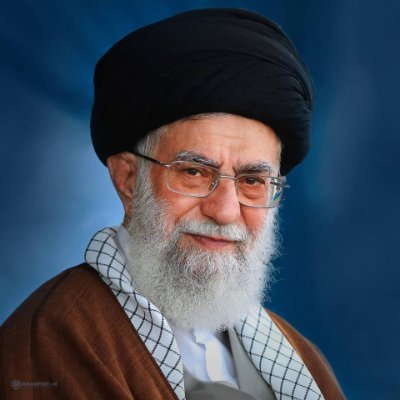
On the morning of February 28, 2026, a series of joint United States-Israeli airstrikes struck multiple locations across Tehran and beyond, targeting high-ranking Iranian officials. Among the dead: Ayatollah Ali Khamenei, 86, who had served as the Supreme Leader of the Islamic Republic of Iran since 1989 the longest-serving head of government in the Middle East. His death was confirmed by Iranian state media on March 1, and the government declared a 40-day period of national mourning, calling his killing a “martyrdom.”
The assassination marks one of the most consequential moments in Middle Eastern geopolitics in decades. It ends a thirty-six-year chapter defined by ideological rigidity, domestic repression, nuclear brinkmanship, and a sweeping regional influence operation stretching from Lebanon to Yemen. What comes next for Iran and for the broader region is genuinely uncertain.
This editorial attempts a clear-eyed, comprehensive analysis of the event: the man who was killed, the circumstances of his death, its legality under international law, the succession crisis it has triggered, and the sharply divergent reactions it has provoked around the world.
Who Was Ali Khamenei?
Born in 1939, Khamenei was a mid-ranking cleric who rose through the ranks of Iran’s Islamic Revolution alongside Ayatollah Ruhollah Khomeini. He survived an assassination attempt in 1981 that permanently damaged his right arm, and served as Iran’s president from 1981 to 1989. When Khomeini died, Khamenei though considered by many senior clerics to lack the religious gravitas for the role was elevated to Supreme Leader, a position that made him the ultimate authority over every branch of the Iranian state: the judiciary, state media, the armed forces, and the powerful Islamic Revolutionary Guard Corps (IRGC).
In the years that followed, he proved himself a shrewd political operator. With the IRGC as his instrument, he steadily side-lined rivals and consolidated power to a degree unmatched by any previous leader except Khomeini himself. He steered Iran through the ruinous aftermath of the Iran-Iraq War, the imposition of international sanctions, two failed nuclear deals, and wave after wave of domestic protest.
Western analysts and Iranian dissidents alike have long documented Khamenei’s authoritarian record. Iran executed thousands of political prisoners under his watch, most infamously during the mass killings of 1988. Protest movements in 2009, 2019, and most recently the 2022–2026 cycle of uprisings were met with lethal force. Human rights organizations reported that state forces killed more than 7,000 protesters in the period between late 2025 and early 2026 alone.
At the same time, it would be incomplete to describe Khamenei purely as a monster. To his supporters inside Iran and across the Shia Muslim world, he was a steadfast defender of Iranian sovereignty against what they viewed as American and Israeli imperialism, a consistent voice against Western double standards on nuclear weapons, and a figure of spiritual and ideological constancy. His death has been mourned by millions not all of them coerced.
He was both oppressor of his own people and symbol of resistance to foreign domination a contradiction that will define how history remembers him.
The Circumstances of His Killing
According to multiple US and Israeli media reports, the strikes of February 28 represented the most extensive military operation against Iran since the country’s Islamic Revolution. The strikes targeted 24 of Iran’s 31 provinces simultaneously. Iranian Red Crescent figures cited by state media reported at least 201 civilian deaths, including a horrific strike on a girls’ elementary school in the southern city of Minab that killed at least 108 children.
The CIA, according to reporting by The Times and multiple US outlets, provided critical real-time intelligence on Khamenei’s location, moving up the timing of the strikes. General Dan Caine, the US Chairman of the Joint Chiefs, confirmed that US Cyber Command operations had preceded kinetic strikes, blinding Iranian air defences and communications. Republican Congressman Mike Turner stated, however, that the US was not “directly involved” in the killing of Khamenei specifically a distinction that legal scholars will likely contest for years.
President Donald Trump took to Truth Social within hours of the strikes to confirm Khamenei’s death, calling him “one of the evilest people in History” and framing his killing as “justice.” Israeli Prime Minister Benjamin Netanyahu publicly praised the operation. Trump subsequently urged the Iranian people to rise up and take over their government when the strikes concluded, and warned the IRGC to lay down arms or “face certain death.”
Iran’s response has been swift and dangerous. The IRGC pledged revenge and launched strikes on 27 US military bases across the Middle East. Iran targeted US assets in Qatar, the UAE, Kuwait, Bahrain, Jordan, Saudi Arabia, Iraq, and Oman. Airspace was closed across the region as the exchange of strikes continued. The Gulf Cooperation Council convened an emergency session. The UN Secretary-General called for immediate de-escalation.
The Legal and Moral Question
The targeted killing of a sitting head of state even an unelected one raises serious and unresolved questions under international law. The UN Charter prohibits the use of force against the territorial integrity or political independence of another state. While counterterrorism frameworks have been used to justify targeted killings of non-state actors, the assassination of a supreme leader is an act of a different magnitude entirely.
Bangladesh’s Foreign Ministry stated bluntly that the assassination was “a violation of international law and norms.” Russia’s Vladimir Putin condemned it as a “cynical violation of all norms of human morality and international law.” North Korea called it “a thoroughly illegal act of aggression.” Turkey’s Recep Tayyip Erdogan expressed being “saddened.” Even Canada’s Prime Minister Mark Carney, while broadly supportive of the strikes, denied Canadian involvement in the Khamenei killing specifically.
On the other side, Argentina’s President Javier Milei praised the operation, calling Khamenei “one of the most evil, violent, and cruel persons ever seen in the history of humankind” and linking him to Iran’s alleged sponsorship of the 1994 AMIA bombing in Buenos Aires. Iran International, the London-based opposition broadcaster, described his death as the end of “the dictator a nation longed to see gone.”
There is no neat resolution to this tension. The legality of decapitation strikes against authoritarian state leaders is contested terrain, and the international community has never agreed on clear rules. What is not in dispute is that the civilian deaths particularly the school bombing in Minab constitute potential war crimes requiring urgent independent investigation. The killing of children cannot be rendered acceptable by the killing of a tyrant.
The targeting of a girls’ school that killed over a hundred children demands an accounting that no military or geopolitical objective can foreclose.
The Succession Crisis
Iran’s constitution makes no explicit provision for the sudden violent death of a Supreme Leader. Under Article 111, a three-person transitional leadership council assumes power until the Assembly of Experts, 88 senior clerics elected by the public every eight years selects a new Supreme Leader. That council now consists of President Masoud Pezeshkian, Chief Justice Gholam-Hossein Mohseni-Ejei, and senior cleric Ayatollah Alireza Arafi.
The succession race, however, is already complex. Khamenei’s second son, Mojtaba Khamenei, has strong ties to the IRGC and the Basij paramilitary, and is reported by The New York Times to be the most likely candidate. Yet the clerical establishment which overthrew a monarchy in 1979 is reportedly reluctant to endorse father-to-son succession as a matter of principle. Arafi, who sits on both the Assembly of Experts and the Guardian Council, is seen as a credible hardliner alternative.
Sanam Vakil of the Chatham House think tank warned that the Assembly may not be able to convene until US-Israeli strikes wind down, for fear of further casualties among senior clerics. “Moments of succession tend to strengthen conservative and security-driven factions, at least initially,” she observed. “Any internal debate about the country’s direction is likely happening quietly and within narrow elite circles.”
The IRGC’s role will be decisive. Under Khamenei, the Revolutionary Guards grew into a commercial and military empire controlling vast sectors of Iran’s economy. Any successor who fails to secure IRGC loyalty will struggle to govern. This gives the security establishment enormous leverage over who leads Iran next potentially more than at any point since the revolution.
The Iranian People: Grief, Celebration, and Silence
Reactions inside Iran have been more complicated than either side of the international debate cares to acknowledge. Iranian state media broadcast scenes of mass mourning in Tehran and other cities. Hundreds of thousands attended funeral processions. For the significant portion of Iran’s population that remained genuinely devoted to the Islamic Republic and its ideology, Khamenei’s death is an authentic national trauma.
At the same time, Reuters and other agencies quoted witnesses in Tehran, Karaj, and Isfahan reporting scenes of celebration people taking to the streets in what appeared to be spontaneous expressions of relief and even joy. The Iranian opposition, including exiled former Crown Prince Reza Pahlavi, called on Iranians to mobilize for transition. Iran’s security forces, however, showed no signs of defecting, and Trump’s call for mass uprising found little immediate traction.
This ambivalence reflects the profound complexity of Iranian society. Khamenei’s Iran was not a country of universal oppressors and universal victims. There were true believers, opportunists, reluctant enforcers, and genuine dissidents often within the same family. The Islamic Republic, for all its authoritarian failures, provided ideological coherence, social services, and a sense of national identity to millions. What replaces it if anything will need to reckon with that reality.
Regional and Global Implications
The immediate regional fallout is severe. Iranian-backed IRGC strikes on 27 US bases have drawn the entire Middle East into potential escalation. The Gulf states Saudi Arabia, the UAE, Qatar, Bahrain, Kuwait, and Oman are simultaneously hosting US forces and being struck by Iranian retaliation, an almost impossible position. GCC foreign ministers convened an emergency session. Airspace closures rippled across the region.
Iran’s broader regional network Hezbollah in Lebanon, Hamas in Gaza, Houthi forces in Yemen, and Shia militias in Iraq now faces a leadership vacuum at its centre. Whether these groups will coordinate retaliation, negotiate survival, or splinter without Tehran’s command architecture is a critical unknown. The possibility of wider conflagration is real.
Globally, the event has sharpened existing fractures. Russia and China both of which have deepened economic and strategic ties with Iran in recent years have condemned the killing in the strongest terms. The UN Secretary-General called for the world to step back from the brink. The Non-Aligned Movement faces a defining test of whether targeted killing of state leaders by powerful nations sets a precedent that endangers every government everywhere.
This editorial was prepared by the Editorial Board of The PublicReason. It represents the collective assessment of the Board and does not reflect the views of any government or political organization. March 6, 2026 · publicreason.in