
India’s Fiscal Roadmap Offers Illusions, Not Solutions
Finance Minister Nirmala Sitharaman’s Union Budget 2026-27 represents a failure of imagination at a moment demanding bold vision. With ₹53.47 lakh crore at her disposal, the government has produced a document that mistakes accounting gymnastics for economic strategy and confuses political optics with genuine reform. The middle class gets tax relief that barely covers a month’s grocery inflation. Farmers receive high-value crop schemes while drowning in debt from staple cultivation. Youth are promised internships when they desperately need jobs. Women get microfinance platforms while lacking land rights, childcare, and safety. The elderly faces a healthcare system that pushes 55 million Indians into poverty annually through catastrophic medical expenses. This is not a budget for transformation it is fiscal complacency dressed in the rhetoric of “Viksit Bharat.”
The budget’s central deception lies in its revenue arithmetic. Net tax revenue is projected to grow 7.2 percent despite income tax collections falling short by ₹1.26 lakh crore in the current year’s revised estimates. GST revenues consistently underperform targets, yet the government confidently forecasts higher collections without explaining how a shrinking tax base will suddenly demonstrate elasticity it has never shown. Even more troubling is the 85 percent increase in capital receipts driven by aggressive disinvestment targets. History offers a harsh lesson here: these targets are rarely met, and relying on one-time asset sales to fund recurring expenditures is the fiscal equivalent of selling your house to pay rent. With foreign investors withdrawing $22 billion since January and the rupee at record lows, this year’s disinvestment assumptions border on fantasy. The government is engaging in aspirational accounting where desired outcomes substitute for evidence-based projections.
defence spending surges 22 percent to ₹7.84 lakh crore nearly 15 percent of the total budget a response to Operation Sindoor that is strategically necessary but fiscally revealing. This massive expansion occurs while energy storage and transmission funding declines from ₹800 crore to ₹600 crore, wind energy stagnates, and manufacturing infrastructure receives inadequate support. The question is not whether defence modernization matters it clearly does but whether the government has made corresponding adjustments elsewhere to accommodate this priority without gutting growth-critical investments. The answer, evident in every underfunded sector from rural infrastructure to climate adaptation, is a resounding no. India is militarizing its budget while the economic foundations required to sustain military power continue to erode.
The manufacturing agenda reveals policy incoherence bordering on delusion. The government seeks to raise manufacturing’s GDP contribution from under 20 percent to 25 percent through a National Textile Manufacturing Mission focused on traditional cluster modernization precisely the low-value, slow-cycle production that global markets are abandoning. The Biopharma SHAKTI scheme allocates ₹10,000 crore over five years for biologics manufacturing while ignoring cold chain logistics and quality infrastructure without which biopharma cannot scale. Most perplexing is ₹3,500 crore for coal and lignite gasification alongside ₹20,000 crore for carbon capture and storage expensive, unproven technologies that represent fossil fuel incumbents’ influence over industrial policy. These allocations suggest decisions are driven by lobbying rather than evidence-based assessment of which technologies can deliver industrial growth and emissions reductions efficiently. India’s manufacturing will not become globally competitive through subsidizing yesterday’s technologies while competitors invest in tomorrows.
For India’s middle class, the budget offers a masterclass in misdirection. The continuation of tax slabs with no income tax payable up to ₹12 lakh sounds generous until you recognize this represents no change from 2025. The government has foregone ₹1 lakh crore in direct tax revenue through these measures revenue that could have funded transformative investments in healthcare, education, and public transport that would improve middle-class lives far more sustainably than modest tax savings. Consider the typical urban family earning ₹15 lakh annually: their tax relief of approximately ₹1,450 per month does not offset healthcare inflation running at 10-12 percent annually, private school fees consuming ₹1-3 lakh per child, or home loan EMIs claiming 40-50 percent of household income. The real middle-class crisis is not the income tax rate but the collapse of public goods. Thirty years ago, middle-class families accessed quality government schools, affordable public hospitals, and reliable transport. Today, every essential service must be purchased privately at inflated prices while public infrastructure crumbles from decades of underinvestment.
Agriculture receives ₹4.35 lakh crore in combined allocations, a figure designed to impress until disaggregated. Of this, ₹1.70 lakh crore goes to fertilizer subsidies not income support for farmers but price support for fertilizer companies. This subsidy perpetuates chemical-intensive agriculture that degrades soil, depletes groundwater, and traps farmers in rising input costs while generating marginal returns. Only 6 percent of farmers actually benefit from Minimum Support Price procurement, concentrated in Punjab and Haryana for wheat and rice. The vast majority cultivating pulses, oilseeds, fruits, and vegetables receive no price protection, no income security, and minimal institutional support. The budget proposes AI-based agricultural tools requiring internet connectivity that 55 percent of rural India lacks, digital literacy that older farmers do not possess, and reliable electricity that remains a fantasy in many villages. Meanwhile, MGNREGA the genuine employment guarantee that provided survival income during lean seasons has been systematically hollowed out through delayed payments, reduced work days, and stagnant wages whose real purchasing power declines annually.
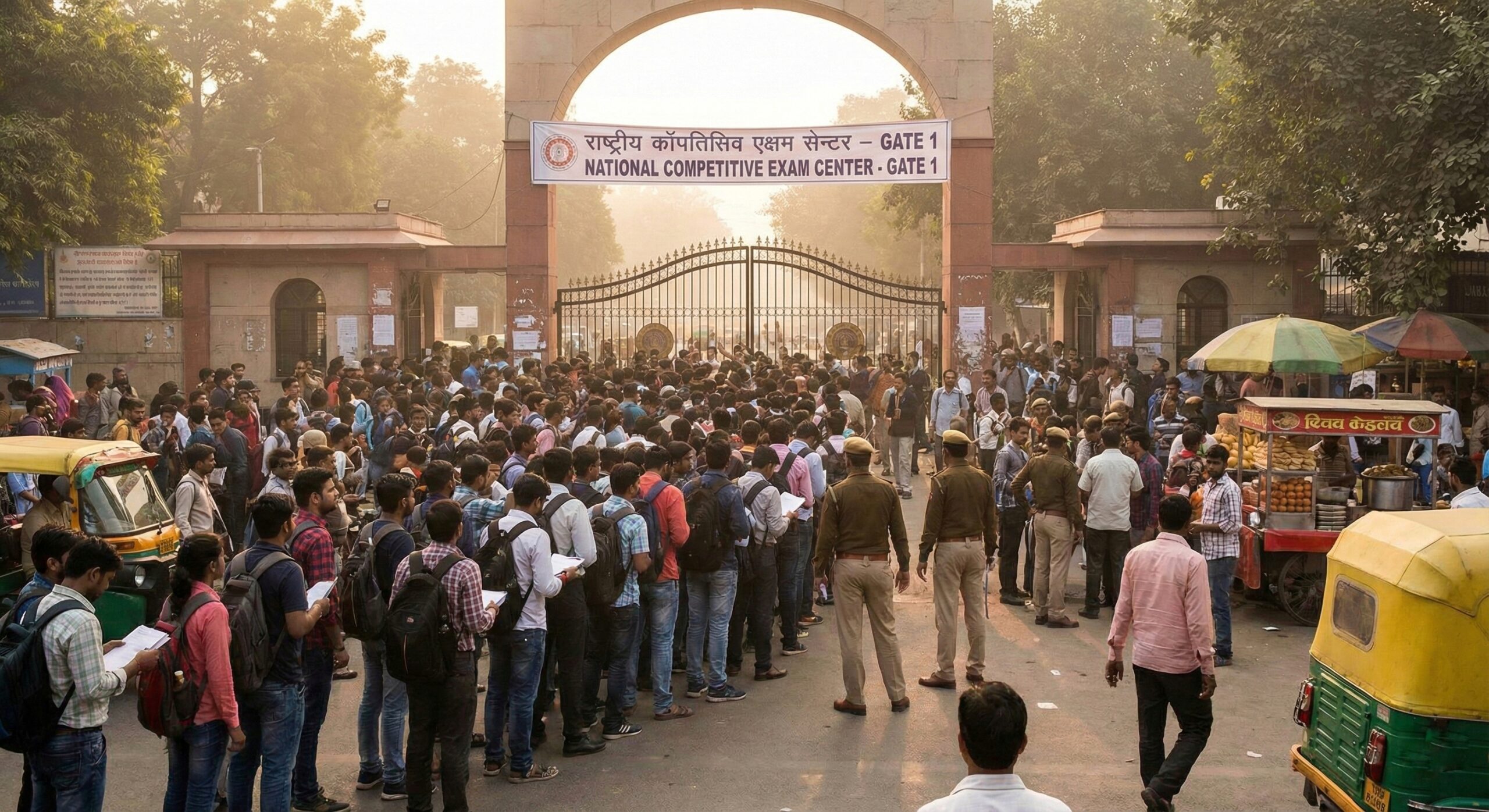
Youth unemployment represents India’s most dangerous policy failure, and this budget compounds the crisis. Approximately one million young Indians enter the job market monthly into an economy creating perhaps 100,000 formal sector jobs. The government’s response: the PM Internship Scheme with ₹4,788.45 crore for temporary corporate placements. Internships are not employment they are six-month delays before the unemployment resumes, allowing corporations to extract cheap labour without creating permanent positions. The budget announces skill development programs, university townships, and training for tourist guides and hospitality workers as though India’s unemployment crisis stems from skills mismatch rather than jobs scarcity. The manufacturing sector that absorbed hundreds of millions in China and Southeast Asia has failed to materialize in India despite decades of policy initiatives and PLI subsidies that show chronic underutilization. Services IT and IT-enabled work employ roughly 5 million people and cannot absorb the 10-12 million entering the workforce annually, particularly as AI threatens even knowledge work. The budget offers skilling without demand, training without employment, and credentials without opportunities. For the 22-year-old engineering graduate from a tier-3 college, this budget provides nothing except the eventual realization that their degree was a credential without value in an economy that cannot employ them.
Women receive rhetorical commitment and token schemes while structural barriers to equality remain unaddressed. The Lakhpati Didi program expands to SHE-Mart platforms providing market access for Self-Help Group products a positive intervention that ignores the fundamental problem. Millions of women in SHGs are trapped in microfinance debt at 18-24 percent annual interest, borrowing to start micro-enterprises that generate marginal returns insufficient to service the debt. Women constitute 65 percent of the agricultural workforce but own less than 13 percent of farmland, meaning they cannot access institutional credit, have no collateral, and remain economically subordinate regardless of their labour contribution. The National Health Mission’s family welfare funding has actually declined from ₹1,536.97 crore to ₹1,524.74 crore at a time when maternal mortality remains at 97 per 100,000 live births, over half of reproductive-age women suffer anaemia, and cervical cancer rates rise while the HPV vaccine remains prohibitively expensive and excluded from routine immunization. The budget is silent on women’s safety despite this being the fundamental constraint on economic participation working women face harassment in public transport, unsafe working conditions, and inadequate legal recourse. Universal childcare, the single highest-return investment for women’s workforce participation demonstrated by Scandinavian countries decades ago, receives no significant allocation. Women need land rights, equal pay enforcement, childcare infrastructure, and safety not microfinance platforms to deepen their debt burden.
The elderly and healthcare represent perhaps the budget’s most morally indefensible failure. India has 150 million people aged 60 and above, projected to double by 2050, requiring massive investments in healthcare infrastructure, long-term care, and social security. The health ministry allocation increased to ₹1.06 lakh crore, which sounds substantial until you recognize this represents roughly ₹750 per capita annually in a country where a single serious hospitalization costs ₹50,000-5,00,000. Public health spending remains at 1.9 percent of government expenditure, far below the National Health Policy’s abandoned target of 2.5 percent of GDP and a fraction of the 5-10 percent that functional universal healthcare systems require. Pradhan Mantri Jan Arogya Yojana provides ₹5 lakh coverage for hospitalization but excludes outpatient care, diagnostics, and medicines for chronic conditions precisely the healthcare needs that burden seniors. India’s out-of-pocket health spending stands at 48 percent of total health expenditure, among the highest globally, pushing 55 million Indians below the poverty line annually through catastrophic medical costs. Only 15 percent of elderly Indians receive any pension, and the vast majority who worked in the informal sector their entire lives face old age with minimal savings, no social security, and dependence on children whose own economic situations are precarious. The budget proposes training 1.5 lakh caregivers for geriatric care welcome but representing a tiny fraction of the need in a country where institutional elderly care infrastructure is minimal, family care systems are breaking down, and dementia, depression, and chronic illness among seniors goes massively under-diagnosed and untreated.
The fiscal sustainability questions should alarm anyone examining this budget seriously. Outstanding liabilities stand at 55.6 percent of GDP, and interest payments now consume 42 percent of revenue receipts up from 37 percent in 2013-14. As the debt servicing burden grows, fiscal space for productive investments shrinks, creating a vicious cycle where limited resources go to paying past debts rather than building future capacity. The government’s fiscal consolidation claims rest on optimistic revenue projections that have consistently failed to materialize, aggressive disinvestment targets with poor historical fulfilment rates, and the absence of genuine expenditure discipline or revenue base expansion. The tax-to-GDP ratio hovers around 11-12 percent, far below developing country peers, because the government lacks political courage to tax agricultural incomes above thresholds, impose meaningful wealth taxes, or close corporate tax loopholes. Instead, we get fertilizer subsidies benefiting companies more than farmers, poorly-targeted food subsidies suffering from leakages, and petroleum subsidies disproportionately helping the wealthy who consume more fuel. The budget makes no serious move toward Direct Benefit Transfer consolidation that could reduce leakages and provide cash rather than inefficient in-kind benefits.
What remains most conspicuous in this budget is what it refuses to acknowledge. Climate change impacts erratic monsoons, heat waves, floods, droughts are accelerating, yet climate adaptation spending is minimal. There are no major programs for drought-proofing agriculture, coastal protection receives inadequate funding, urban heat island mitigation is ignored, and vector-borne disease preparedness goes underfunded even as dengue and malaria expand their range. The budget allocates ₹20,000 crore over five years for speculative carbon capture and coal gasification technologies while proven renewable energy and adaptation measures receive incremental support. This is climate policy incoherence driven by fossil fuel interests rather than scientific evidence. Universal basic services—guaranteeing all citizens quality education, comprehensive healthcare, adequate nutrition, safe housing, and clean water represent an alternative to the current fragmented scheme-based approach, but the budget doesn’t consider this transformative vision. Industrial policy scatters resources across multiple sectors based on political considerations rather than strategic assessment of India’s comparative advantages. And decentralization remains rhetorical states implementing most development programs remain resource-constrained and dependent on central transfers rather than enjoying fiscal autonomy to innovate and respond to local needs.
The tragedy of Budget 2026-27 is not resource scarcity India’s GDP exceeds $3.5 trillion but the poverty of ambition. The government had an opportunity to address structural challenges: unemployment requiring aggressive job creation policies, agricultural distress demanding income security and sustainable farming support, healthcare inadequacy necessitating universal coverage, education failure requiring systemic reform, inequality calling for progressive taxation and redistribution, and climate crisis demanding immediate, massive investment. Instead, we received incremental adjustments to a failing status quo, accounting tricks disguised as fiscal consolidation, and schemes designed for political optics rather than transformative impact. The middle class gets tax relief insufficient to offset inflation while public services collapse. Farmers receive input subsidies perpetuating unsustainable agriculture while lacking income security. Youth are offered skilling and internships while the economy fails to create jobs. Women get microfinance platforms while structural inequalities remain entrenched. The elderly face healthcare costs that impoverish families while social security stays minimal. And the nation’s fiscal position weakens as interest payments consume growing shares of revenue while productive investments decline.
India stands at a critical juncture where demographic dividend, geopolitical opportunity, and climate action windows will not remain open indefinitely. Each year of incremental budgets failing to address structural challenges is a year that cannot be recovered. The cost of this timidity will be measured in lost human potential as young people languish unemployed, preventable deaths from healthcare inadequacy, perpetuated poverty as growth bypasses the majority, irreversible environmental damage, and deepening inequality. The promise of “Viksit Bharat” developed India by 2047 requires not higher spending but strategic reallocation, institutional strengthening, progressive taxation, and honest accounting. This budget fails every test. It is fiscally fragile where robustness is required, strategically scattered where focus is essential, and optimistically projected where conservative planning is prudent. Until India’s fiscal policy demonstrates genuine commitment to revenue enhancement through progressive taxation, expenditure prioritization toward productive investments, universal provision of basic services, and outcome accountability rather than announcement-driven governance, budgets will remain annual exercises in managed expectations rather than instruments of transformation. The people of India deserved a budget equal to their aspirations and needs. They received instead a document that perpetuates the status quo while claiming to chart a path forward a budget not for the India that could be, but for the India that powerful interests want to preserve.