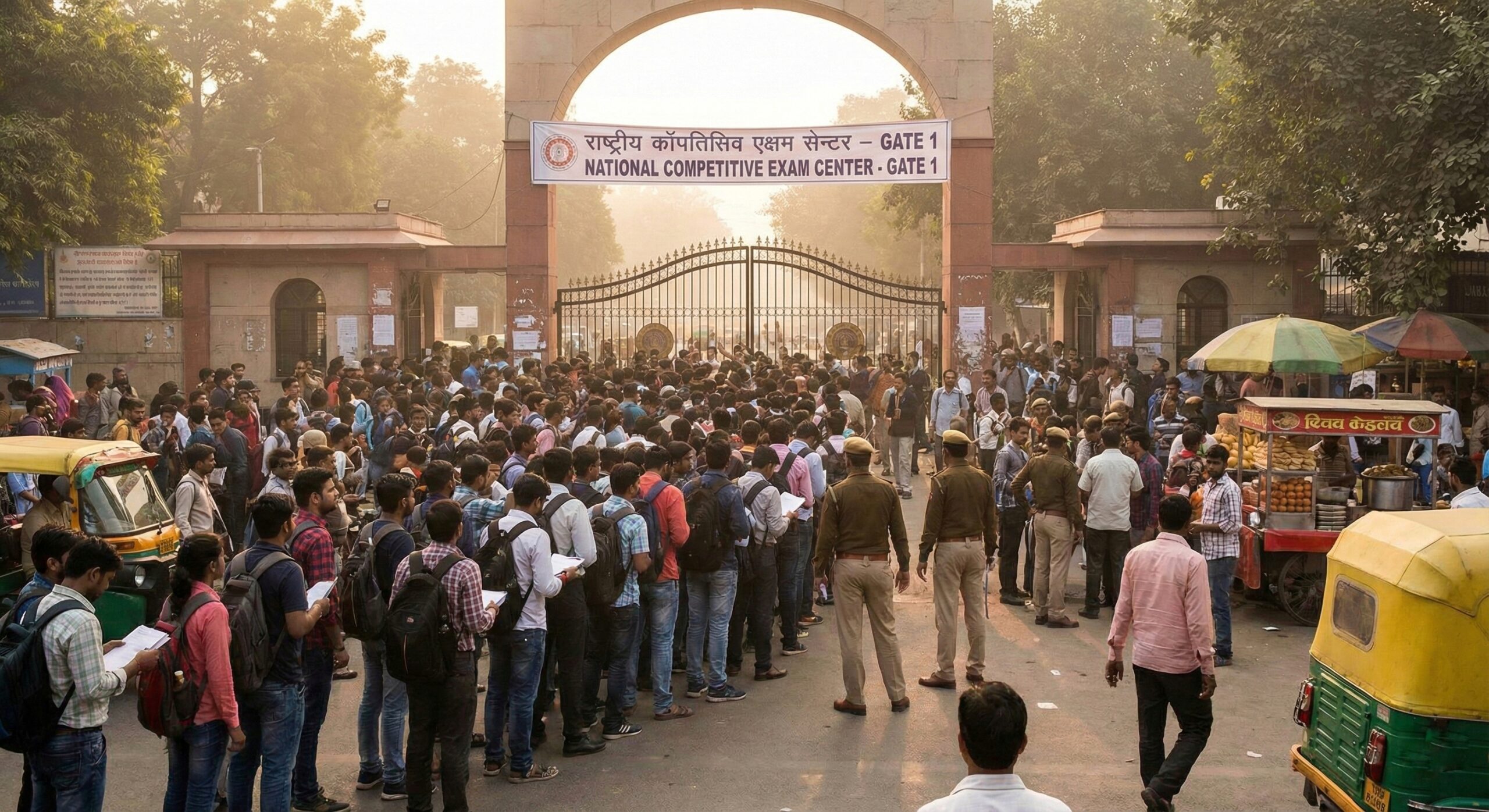


National-level examinations are not just tests. They are the state’s promise of fairness, merit, and equal opportunity. When such examinations fail, the damage goes far beyond individual candidates it destroys public trust in institutions and undermines the very idea of merit-based selection. The UGC National Eligibility Test (UGC NET) December 2025 has exposed serious cracks in this promise. While problems have been reported across multiple subjects, the History paper reveals the worst of what has gone wrong. The errors here are not isolated mistakes they show a complete breakdown in how the National Testing Agency operates. What is happening in History exposes a much larger problem: NTA’s refusal to be held accountable to anyone.
The problems in the History paper are not debatable. Candidates have pointed out specific questions where the official answer key is simply wrong. These include answers that contradict basic NCERT textbooks, questions with confusing options that overlap, and questions where none of the four options are historically accurate. These are not matters of interpretation; they can be verified by checking standard academic sources that students are expected to study from. Other subjects have also reported problems. But in History, the sheer number of errors combined with very high cut-off marks has led to a clear injustice. When errors appear here and there, it looks like carelessness. When the same kinds of errors appear repeatedly and directly affect who qualifies and who doesn’t, it reveals something worse: a system that has failed completely. The consequences are simple and devastating. Candidates who marked wrong answers that contradict historical facts have qualified for NET or JRF. Meanwhile, many candidates who answered correctly based on established historical evidence have been rejected. In History, where cut-offs were unusually high this year, even a few wrong questions in the answer key completely changed who passed and who failed. This is not about marks anymore. This is about basic fairness. UGC NET decides who can teach in universities and who gets government research fellowships. If wrong answers can determine eligibility in one subject, how can we trust the results in any subject?
The real problem is not just the errors. It is how NTA responds when errors are pointed out. NTA claims that its answer-key challenge process allows candidates to raise objections. In reality, this process is a sham. Candidates submit objections and pay fees, but they get nothing in return—no explanations for why their objections were rejected, no details about which experts reviewed them, and no transparency about how decisions were made. The final answer key is simply released. No reasoning. No debate. No accountability. This is the definition of autocratic functioning centralized power, zero transparency, and complete immunity from questioning. NTA operates like it is above scrutiny, as if its decisions cannot be challenged no matter how many errors are proven. This might make administration easier for NTA, but it destroys academic credibility. When an examination body refuses to explain its decisions and instead demands blind acceptance, it has abandoned any claim to being an academic institution. NTA’s lack of transparency is not an accident. It is deliberate. By refusing to explain how objections are handled, who reviews them, or why corrections are rejected, NTA protects itself from accountability. It is easier to hide behind secrecy than to defend flawed decisions in public. This becomes especially problematic when errors can be proven using textbooks and academic sources. Even coaching institutes, which usually celebrate their students’ success rates loudly, have been unusually quiet this year. This silence is telling. They know that results in subjects like History are questionable and likely to be challenged.
It would be wrong to dismiss this as a problem limited to one subject. History is simply where the failure is most visible. If NTA can reward wrong answers and ignore valid objections in History, it can do the same in any subject. What has happened in History should be seen as a warning, not an exception. A national testing system cannot have credibility in some subjects and not others. Either the system is trustworthy across the board, or it isn’t trustworthy at all. Fixing this problem requires real changes, not token gestures. Disputed questions must be reviewed by independent academic experts, and the reasoning behind decisions must be made public, not kept secret. The answer-key challenge process must give candidates actual responses to their objections, not silence. NTA must stop pretending it never makes mistakes and accept that admitting errors is a sign of integrity, not weakness. Oversight mechanisms like RTI requests, parliamentary questions, and academic audits should be treated as necessary checks on power, not as irritants to be avoided.
The UGC NET December 2025 controversy is not really about one subject, one result, or one exam cycle. It is about what national examinations mean in a democracy. Are they fair processes based on academic standards and transparent reasoning? Or are they administrative exercises where a powerful agency makes decisions behind closed doors and expects everyone to accept them without question? History may be suffering the most right now, but the questions this raises matter to everyone who believes in merit, transparency, and academic integrity. Until NTA stops allowing wrong answers to determine who qualifies, and until it starts explaining its decisions instead of hiding behind secrecy, one question will not go away: If wrong answers can decide merit, what are we actually testing for?