
A Remembrance and a Reckoning
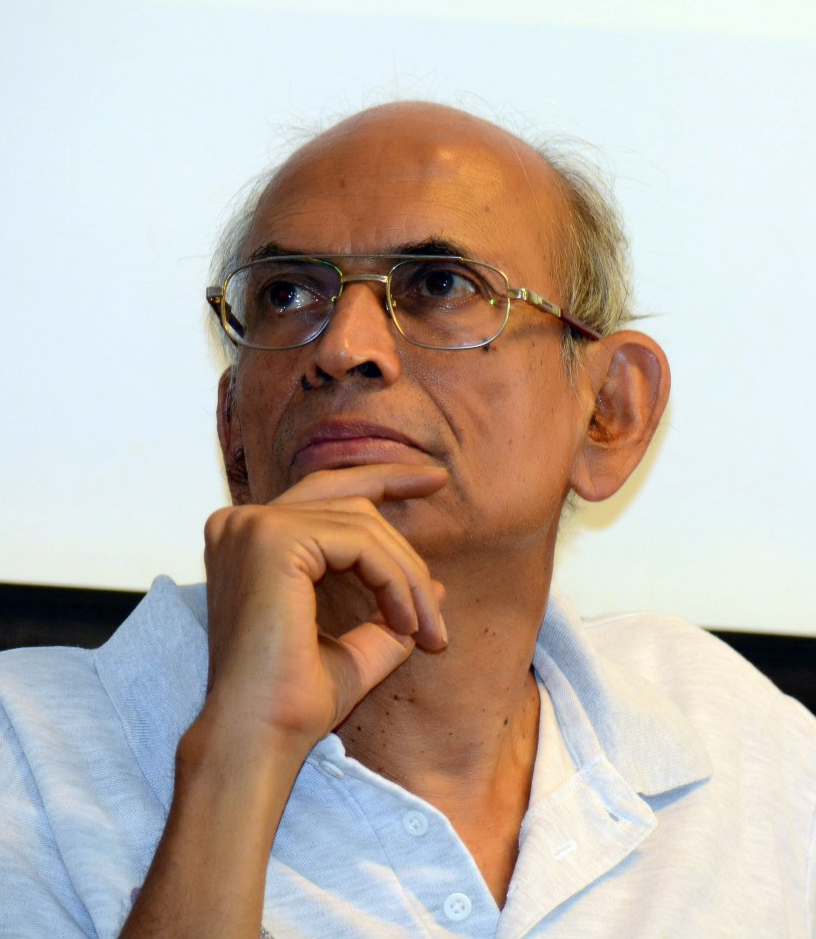
On the night of January 7, 2026, India lost Madhav Dhananjaya Gadgil, one of its most prescient environmental scientists. He was 83. But this is not merely an obituary for a distinguished ecologist who received the Padma Bhushan and the United Nations Champions of the Earth award. This is a reflection on what it means when a nation ignores its wisest voices until disaster proves them right and even then, struggles to learn the lesson.
Gadgil spent six decades warning India about the consequences of ecological recklessness. He was burned in effigy for his trouble. Protesters threatened to break his legs. Political leaders organized mock funerals to denounce him. And when catastrophe finally arrived exactly as he predicted, exactly where he predicted the nation mourned its dead and moved on, still unwilling to implement the recommendations that might have saved them.
The question his life and death pose to us is uncomfortable but necessary: What does it say about our governance, our priorities, and our democracy when we systematically reject scientific evidence until bodies are recovered from the debris?
A Life Devoted to Understanding
Born in Pune on May 24, 1942, to the distinguished economist Dhananjay Ramchandra Gadgil, Madhav grew up in an intellectually rich environment that shaped his scientific temperament. His father, who served as deputy chairman of the Planning Commission and authored the influential Gadgil Formula for central assistance to states, instilled in him a commitment to public service. His neighbour, anthropologist Irawati Karve, taught him to grow up without religious, caste, or class prejudices lessons that would define his approach to conservation.
At age nine, Gadgil accompanied Karve on fieldwork to Kodagu, where he saw wild elephants and a sacred grove at Talakaveri, near the origin of the Kaveri River. That experience crystallized his fascination with India’s biodiversity. But another formative moment came at fourteen, when he learned about the forest destruction and displacement linked to the Koyna dam one of Jawaharlal Nehru’s “temples of modern India.” He learned early that development’s costs are real, borne by people who are rarely consulted.
After completing his undergraduate degree in biology from Fergusson College and a master’s in zoology from Mumbai University, Gadgil pursued his PhD at Harvard University, where he specialized in mathematical ecology and animal behavior. It was there he adopted a credo he repeated throughout his life: “Take nothing on authority, subject all assertions to scrutiny, and maintain what is right without worrying about the reactions.”
At Harvard, he met Sulochana, a brilliant mathematician who became his intellectual partner and wife. Both returned to India in 1971. In 1973, Gadgil joined the Indian Institute of Science in Bangalore, where he founded the Centre for Ecological Sciences establishing one of the country’s premier institutions for ecological research. He retired in 2004 but continued his work with the Agharkar Research Institute in Pune and the University of Goa.
The Scholar as Activist
Gadgil was a prolific researcher, authoring over 250 scientific papers. But he refused to be merely an academic. He believed ecology was inseparable from social justice, and that conservation must empower local communities rather than exclude them. This philosophy permeated his most influential work, “This Fissured Land,” co-authored with historian Ramachandra Guha. The book argued that environmental degradation in India reflected deep divisions in access to nature’s resources inequalities rooted in centuries of social hierarchies, colonial extraction, and post-independence development choices.
“The Western Ghats has been torn asunder by the greed of the elite and gnawed at by the poor, striving to eke out a subsistence,” he wrote in the preface to his 2011 report. This was not rhetoric. It was a precise diagnosis of how ecological destruction operates: the powerful extract resources for profit while the marginalized scramble for survival, and both processes compound the degradation.
Gadgil’s approach to conservation was democratic, not autocratic. He spent years conducting fieldwork with tribal communities, farmers, herders, and fisherfolk. He studied sacred groves, traditional knowledge systems, and indigenous conservation practices. He believed that those who lived closest to the land knew it best and should have decision-making power over it. This was radical in Indian conservation circles, where top-down, fortress conservation keeping people out to protect nature had long been the dominant model.
His early work led to the establishment of India’s first biosphere reserve, the Nilgiris, in 1986. He played a crucial role in the Save Silent Valley Movement in the late 1970s and early 1980s, helping protect a pristine rainforest from a hydroelectric project. He was instrumental in drafting India’s Biological Diversity Act and contributed to implementing the Forest Rights Act.
The Report That Became a Warning
In 2010, the Ministry of Environment and Forests appointed Gadgil to chair the Western Ghats Ecology Expert Panel (WGEEP), tasked with assessing climate change impacts and identifying ecologically sensitive areas in one of the world’s eight hottest biodiversity hotspots. The Western Ghats, stretching along India’s west coast, are home to extraordinary biodiversity and provide ecosystem services to millions of people.
Submitted in 2011, the Gadgil Report proposed classifying 64% of the Western Ghats into three Ecologically Sensitive Zones, with graded restrictions on mining, quarrying, large dams, and polluting industries. In Kerala, where the Western Ghats cover nearly half the state and host dense human settlements, the report identified 15 taluks as Ecologically Sensitive Zone 1, requiring the strictest protections. Wayanad particularly Vythiri taluk, including Meppadi panchayat was designated among the 18 most ecologically sensitive areas.
The report specifically warned against indiscriminate quarrying, construction, deforestation, and hill-cutting in these fragile landscapes. It called for participatory governance, community-led conservation, and sustainable development that respected ecological limits. It was comprehensive, scientifically rigorous, and democratically structured.
The response was immediate and ferocious. Protests erupted across Kerala. Gadgil was vilified as a man who valued “frogs and snakes over human lives.” Demonstrators burned him in effigy. Politicians organized rallies against the report. The narrative painted him as an elitist who wanted to evict people from their homes and turn the Western Ghats into a human-free wilderness.
Gadgil repeatedly countered this characterization. He insisted his vision was rooted in community-led conservation, decentralized governance, and sustainable livelihoods. His report explicitly argued that local communities should be decision-makers, not victims. Few listened. Behind the public anger were powerful interests land mafias, quarrying operations, construction lobbies, resort developers who had much to lose from ecological regulation. Many operated with political patronage.
Under political pressure, the government constituted a second committee led by K. Kasturirangan, whose 2013 report substantially diluted Gadgil’s recommendations, reducing the protected area from 64% to 37% and minimizing community participation. Gadgil was openly critical, calling the Kasturirangan report technocratic and inadequate. But even the diluted version faced resistance and was never fully implemented.
When Nature Delivered the Verdict
The ultimate assessment of Gadgil’s work came not from political forums but from the land itself. Since 2018, Kerala has experienced a series of devastating floods and landslides. In 2019, a landslide in Puthumala, Wayanad, killed 17 people. In 2020, landslides at Pettimudi in Idukki killed more than 60. In 2021, Koottickal in Kottayam was buried.
Then came July 30, 2024. In the early hours, the hills of Mundakkai, Chooralmala, and Punchirimattom in Meppadi Gram Panchayat areas specifically identified by Gadgil as Ecologically Sensitive Zone 1 gave way with a roar that was heard for miles. The landslide buried entire villages under mud and rock. Official reports confirmed at least 373 deaths, over 200 injuries, and 218 people missing. It was the deadliest disaster in Kerala’s history.
Gadgil called it a “man-made disaster.” Post-disaster analyses revealed an uncomfortable truth: the catastrophe occurred precisely in areas where his panel had recommended the strictest protections. Between 1950 and 2018, Wayanad had lost 62% of its forest cover, while tea plantation area increased by 1,800%. Quarrying, slope-cutting, road construction, resort development, and unregulated tourism had stripped the landscape of its resilience. When extreme rainfall hit intensified by climate change but not caused solely by it the degraded terrain could not absorb the water. The hillside collapsed.
Scientists analyzing the disaster noted that if Gadgil’s recommendations had been implemented, many lives could have been saved. A warning system operated by the Wayanad-based Hume Centre for Ecology and Wildlife Biology had even issued an alert 16 hours before the landslide. The district administration did not act on it because it was not integrated with the official warning system. Lives were lost not because knowledge was unavailable, but because systems failed to use it.
The Question of Responsibility
Gadgil’s story raises a fundamental question about democratic governance and scientific responsibility. Who bears accountability when disaster strikes after scientific warnings are ignored?
The political leaders who organized protests against the report? The business interests that lobbied against restrictions? The citizens who participated in rallies without understanding the science? The media that amplified fear-mongering narratives? The bureaucrats who diluted recommendations under pressure? Or all of them, in varying degrees?
Gadgil himself seemed to understand that the problem was systemic. In one of his final interviews with the United Nations Environment Programme, he said: “I have the satisfaction that as a scientist, empathetic to the people, I have been able to do various things which have helped in changing the direction of what is happening. I’m a durable optimist and hopeful that this progress will continue to gather pace.”
This was characteristic of his approach. Even when vilified, even when his warnings went unheeded, even when disasters vindicated his predictions, Gadgil remained constructive rather than accusatory. He believed in democracy’s capacity for self-correction, in people’s ability to learn, and in science’s power to guide better decisions.
But his optimism should not absolve us of responsibility. The Wayanad landslides were not unavoidable acts of God. They were the foreseeable consequences of policy choices made against scientific advice. Every level of governance failed local, state, and national. And the people who paid the price were not the policymakers or business interests who profited from ecological destruction, but ordinary citizens, many of them tea estate workers who had migrated for employment.
The Pattern of Rejection
Gadgil’s experience with the Western Ghats report is not unique in India or globally. Scientists warning about climate change face systematic dismissal. Public health experts cautioning about pandemic preparedness are ignored until crises erupt. Engineers highlighting infrastructure vulnerabilities are side-lined for budget reasons. Economists warning about unsustainable fiscal policies are criticized as pessimists.
There is a pattern here, one that transcends any single political party or ideology. Short-term political calculations consistently override long-term planning. Immediate economic gains take precedence over environmental sustainability. Powerful interests suppress inconvenient truths. And by the time reality catches up, those who made the destructive decisions have often moved on to other roles.
Gadgil understood this dynamic deeply. In “This Fissured Land,” he traced how colonial authorities dismissed indigenous knowledge about forest management, how post-independence planners prioritized industrial growth over ecological balance, and how contemporary development models continued these patterns. He saw environmental conflicts not as technical problems but as political ones, centred on who decides how land and resources are used, and on what evidence.
A Legacy Beyond Awards
Gadgil received numerous honours during his lifetime: the Padma Shri in 1981, the Padma Bhushan in 2006, the Shanti Swarup Bhatnagar Prize, the Volvo Environment Prize, the Tyler Prize for Environmental Achievement, and the UN Champions of the Earth award in 2024. These recognitions matter, but they are not his most important legacy.
His true legacy lies in the institutions he built the Centre for Ecological Sciences, the Centre for Theoretical Studies, the networks of researchers and activists he mentored. It lies in the students he trained, many of whom have become leaders in conservation and ecology. It lies in the movements he supported, from Silent Valley to community forest rights.
Most importantly, his legacy lies in the example he set: of scientific integrity paired with social commitment, of rigorous research translated into accessible communication, of expertise offered in service of democracy rather than in pursuit of power.
As former environment minister Jairam Ramesh wrote in tribute: “Nation builders come in different forms and varieties. Madhav Gadgil was definitely one of them. Above all he had the hallmark of a true scholar, he was gentle, unassuming, and exuded empathy and humility behind which was a vast ocean of knowledge and learning.”
The Unfinished Work
Gadgil’s death comes at a moment when his warnings have never been more urgent. Climate change is intensifying extreme weather events across India. Kerala continues to experience devastating floods and landslides. The Western Ghats remain vulnerable to unchecked development. And the recommendations of the WGEEP report now 15 years old remain largely unimplemented.
His wife, meteorologist Sulochana Gadgil, passed away in July 2025. They had devoted their lives to understanding India’s environment he focusing on ecology, she on the monsoons that sustain the subcontinent. Both spent decades warning about the consequences of disrupting natural systems. Both saw their warnings frequently ignored.
What would honouring Gadgil’s memory actually require? Not just tributes and condolences, but action:
Implementing the Western Ghats Ecology Expert Panel recommendations, with adaptations based on 15 years of additional data and climate change projections.
Establishing integrated early warning systems for landslides and floods in vulnerable areas, and ensuring these warnings reach and are acted upon by local authorities.
Conducting comprehensive risk mapping and integrating this data into town planning and development approval processes.
Empowering local communities in environmental governance, as Gadgil consistently advocated.
Reforesting degraded areas and implementing soil conservation measures to stabilize terrain.
Regulating quarrying, construction, and tourism in ecologically sensitive zones.
Creating mechanisms to ensure that scientific advice genuinely informs policy rather than being commissioned and then ignored.
Most of these measures would have economic costs. They would restrict some forms of development. They would require relocating settlements from high-risk areas. They would limit profits for certain industries. But as Wayanad demonstrated, the cost of inaction is measured in hundreds of lives lost, families destroyed, and communities shattered.
Learning to Listen
Gadgil once wrote that conservation was about protecting people as much as protecting nature, because the two are inseparable. The communities most dependent on ecosystem services forests, rivers, fertile soil are typically the most vulnerable to ecological degradation. When forests are cleared, it is not resort owners who lose their water sources; it is villagers downstream. When hillsides collapse, it is not quarry operators whose homes are buried; it is tea estate workers and their families.
This insight that environmental protection and social justice are intertwined was central to Gadgil’s worldview. He rejected the false choice between development and conservation, insisting that sustainable development requires both economic progress and ecological wisdom. He understood that short-term extraction produces long-term poverty, while thoughtful stewardship creates enduring prosperity.
The challenge now is whether India’s governance systems can learn to integrate such wisdom before the next disaster. Can political institutions value long-term sustainability over short-term gains? Can development models respect ecological limits? Can communities gain meaningful participation in decisions about their environment? Can scientific expertise inform policy without being subordinated to political expediency?
These are not abstract questions. They determine whether future generations will inherit forests and rivers or landslides and droughts. They shape whether development lifts people sustainably or enriches a few while endangering many.
A Final Reflection
There is a particular tragedy in Gadgil’s story. He spent six decades producing rigorous science, communicating clearly with policymakers and the public, offering constructive recommendations, supporting community-led solutions, and mentoring the next generation of scientists. He did everything a public intellectual and engaged citizen could do. And yet, when catastrophe arrived exactly as he predicted, the structures of power had changed little.
But perhaps Gadgil’s optimism his “durable optimism,” as he called it offers a different perspective. Change in complex systems is rarely linear. Seeds planted may not sprout immediately but can bear fruit years later. The students he mentored continue his work. The institutions he built remain active. The reports he authored serve as templates for better policy. The communities he empowered defend their environments.
His life’s work was not to force change but to make it possible to provide the knowledge, the frameworks, the evidence, and the inspiration that future reformers will need. In that sense, his legacy is not finished but ongoing, carried forward by those who share his vision of a more just and sustainable India.
As we mourn Madhav Gadgil, we should also ask ourselves: Will we be the generation that finally heeds the warnings? Will we implement the protections that science recommends before disaster forces our hand? Will we value wisdom over convenience, sustainability over extraction, and foresight over denial?
Or will future generations write about us as we now write about those who rejected Gadgil as people who had the knowledge, the warnings, and the time to act, but chose not to?
The hills of Wayanad have already answered that question for the lives lost in 2024. The question now is what answer we will give for the lives not yet at risk, but increasingly endangered by choices we make today.
Madhav Gadgil showed us the path. The responsibility to walk it is ours